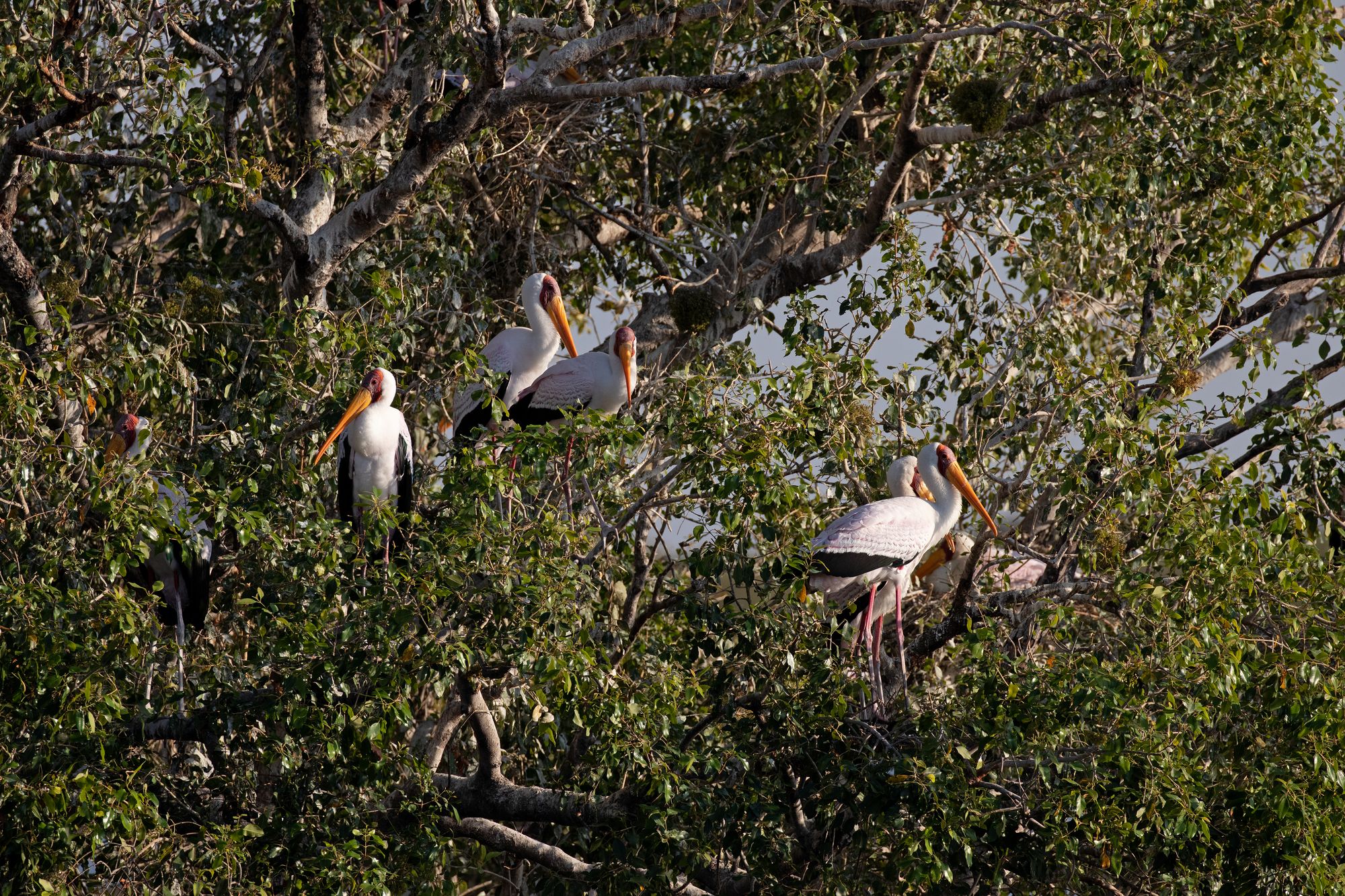
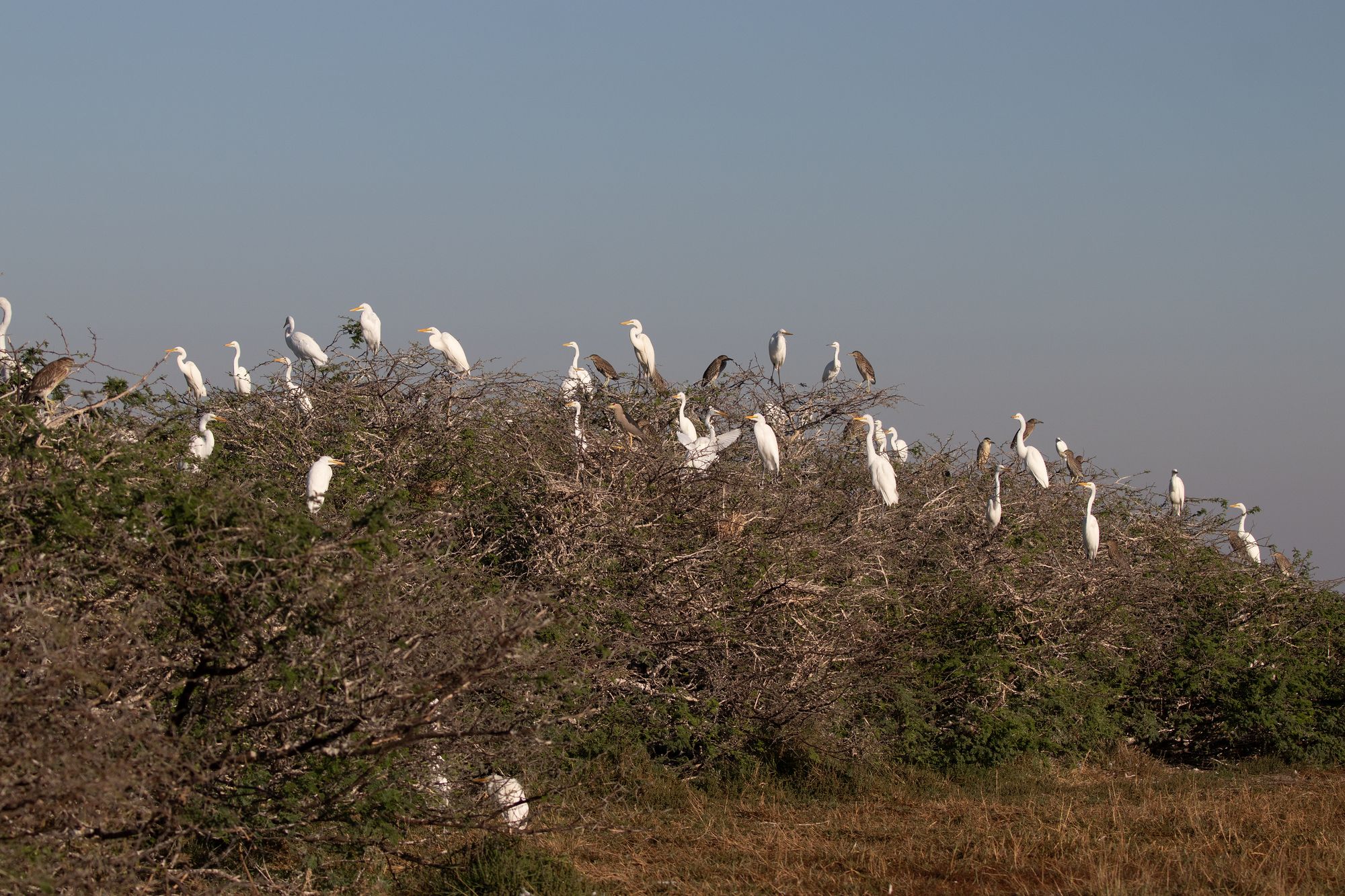
Many waterbird species nest at communal breeding sites that we call colonies. Colonies may range in size from a couple nesting pairs to tens of thousands, and nests can be found in tree or reedbeds. This variation creates challenges for monitoring breeding ecology, as a one-size-fits-all approach will not hold up in some contexts. Because the breeding outcomes of waterbird colonies can inform us about environmental conditions and impacts of environmental change, it is essential to have reliable and replicable information from colonies across a region. The logistical difficulties of this are immense though, especially considering many colonies are flooded and have crocodiles and hippos present that make fieldwork dangerous.
Besides mapping regionally significant waterbird colonies during our field work, we are in the early stages of developing an approach to use high-resolution remote sensing imagery to monitor colonies without having to get our feet wet in the field. Ecologists love being in the field, so while this takes some of the fun out of things, this approach will provide invaluable data on colonies across Africa that may be inaccessible due to logistical, financial, and safety constraints. Further, this means we can even use imagery from the past to measure breeding outcomes from long-term colony sites.