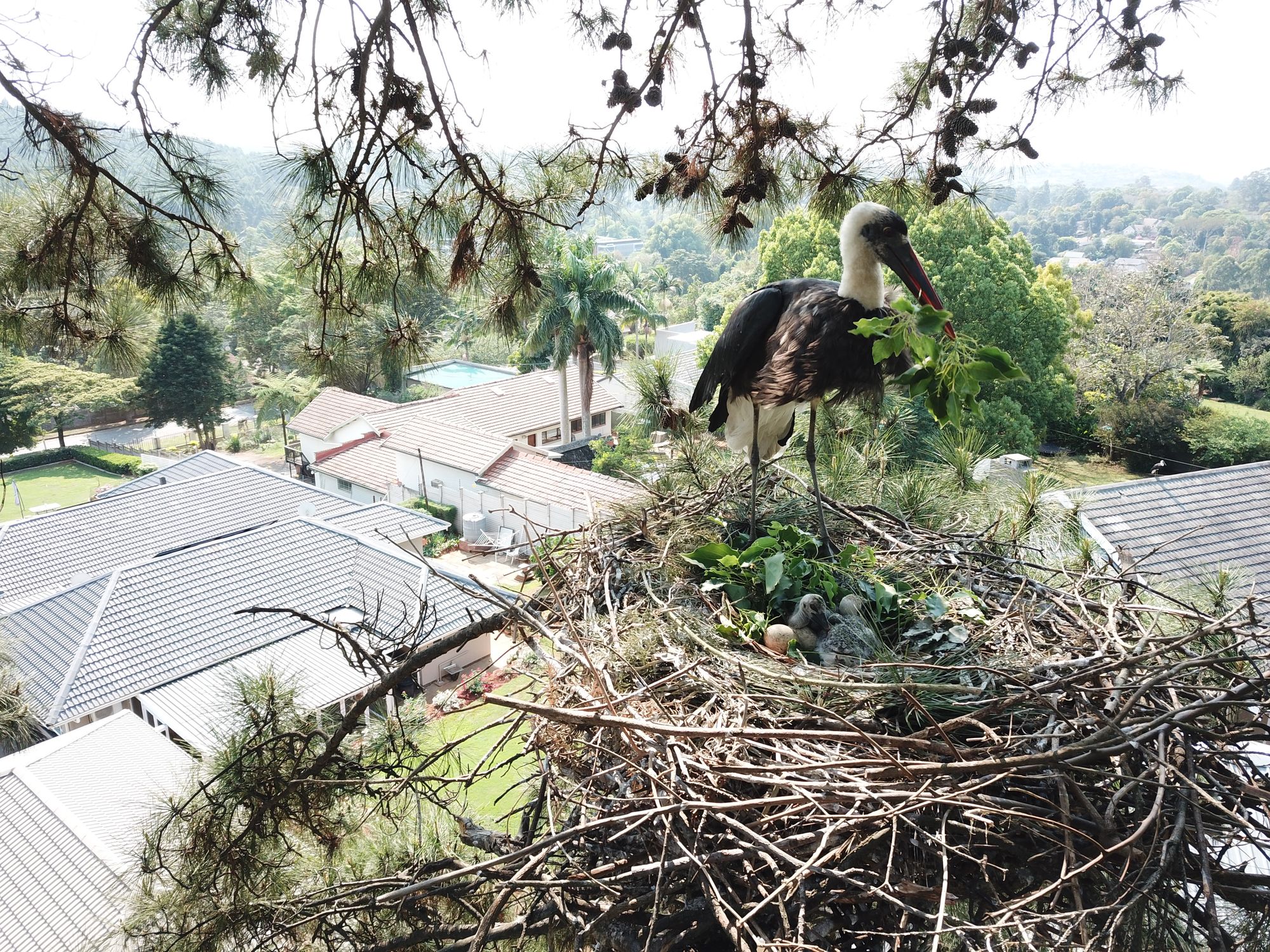
The African Woolly-necked Stork was conventionally considered a shy and secretive species on undisturbed wetlands. Since the 1980s, when there were an estimated 30 breeding pairs in South Africa, this species has significantly expanded in numbers and geographic range. Importantly, it seems this expansion closely followed the sprawl of urban and suburban areas in KwaZulu-Natal Province, where it is now a common garden bird in many areas. How could a large, long-lived waterbird previously considered shy and secretive go from being one of the rarest birds in the region to a household species known (and fed) by most homeowners?
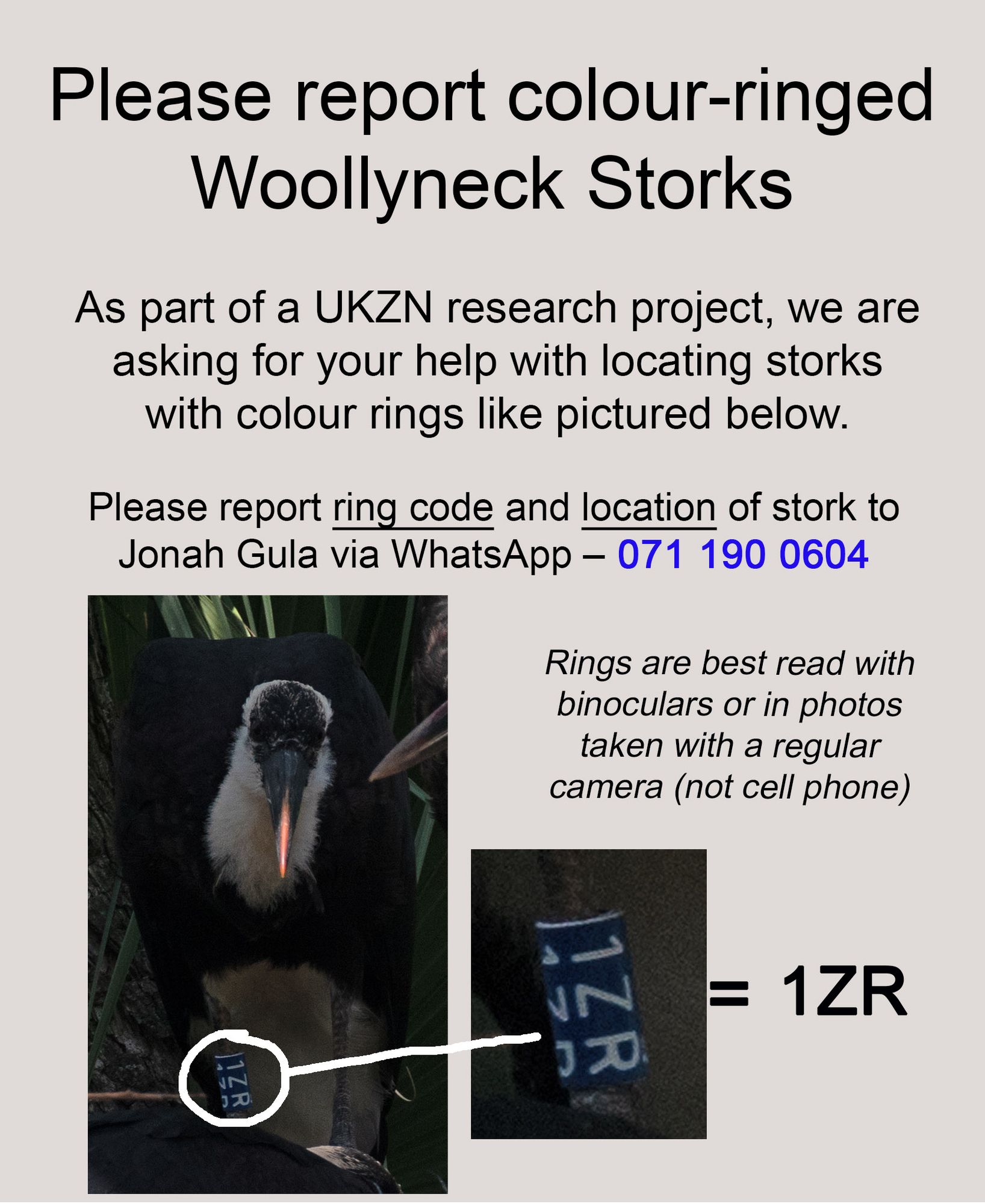
Dr Gula’s PhD research focused on this and other ecological questions about urban Woolly-necked Storks. You can learn more about the findings of this project in some of his publications on our Publications page and in a popular article written for a local conservancy. Although much of this project has wound down, Dr Gula is continuing the citizen science component, collecting sightings of colour-ringed storks from members of the public. Every sighting is a valuable datapoint that goes into a database that will soon be used to answer questions about juvenile dispersal, age at first breeding (unknown for the species), and juvenile survival rates.